
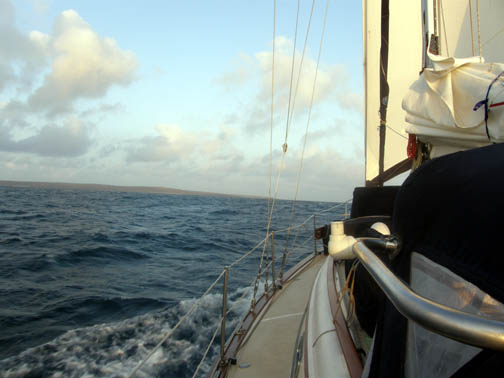
Setting Sail Into Change
When my wife Dee and I untied the dock lines and set out on what we thought would be a three-year sabbatical at sea, we had no idea that it would stretch into 17 years of living aboard our sailboat and exploring more than 100 countries.
We thought we were chasing freedom, adventure, and sunsets. What we didn’t realize was that sailing would become the best leadership and life-training program we could ever imagine.
At sea, change isn’t a theory. It isn’t something debated in committee or announced in an all-hands memo. Out there, change is survival. Winds shift without warning. Squalls rise suddenly on the horizon. A current can push you miles off course overnight. Equipment that worked flawlessly yesterday refuses to work today.
In that environment, resisting change isn’t an option. You can’t send a complaint to headquarters when the weather doesn’t cooperate. You adapt or you don’t make it.
And here’s the lesson for leaders: change isn’t the enemy—it’s the opportunity.
The Sailor’s Mindset
When you’re 1,000 miles from land, you don’t waste energy wishing the wind would blow from a different direction. You look at the wind you’ve got, you trim your sails accordingly, and you move forward.
Too often in business, I see the opposite. Leaders waste months or years fighting realities they can’t control. A regulation changes. A competitor launches a disruptive product. A new generation of employees arrives with new expectations. And instead of adapting, leaders cling to the old way of doing things.
At sea, that would sink you. On land, it can sink your company.
The sailor’s mindset is simple but profound:
– Don’t waste energy wishing the conditions were different.
– Accept reality faster than others.
– Look for new opportunities in the direction the wind is blowing.
That shift—from seeing change as a threat to seeing it as fuel—is the heart of resilient leadership.
What the Ocean Teaches
On long ocean passages, Dee and I often spent weeks without seeing another ship. Some days were calm and beautiful. Other days brought storms—towering waves, winds shrieking through the rigging, and the boat heeling hard on its side.
It was in those moments that I realized: the storm wasn’t the enemy. It was simply another teacher. It forced me to be resourceful. It showed me the weaknesses in our preparation. It demanded creativity, teamwork, and persistence.
The storm gave me skills and confidence I wouldn’t have developed if life had always been smooth sailing.
Change in the Workplace
Back on land, leaders and employees are in the same boat—whether they realize it or not. The winds of technology, regulation, and social change are constantly shifting.
Gallup reports that 51% of workers feel “used up” at the end of the day, and 44% say they’re burned out. Burned-out employees are three times more likely to leave their jobs.
Much of this exhaustion doesn’t come from workload alone—it comes from how people interpret change. When change is viewed as an endless series of threats, it drains energy. But when leaders reframe change as opportunity, it sparks engagement.
Consider the difference between these two statements:
– “This new system is ruining our workflow.”
– “This new system might free us from repetitive tasks and give us time for more meaningful work.”
Same reality. Different frame. Completely different energy.
Three Strategies for Turning Change Into Opportunity
Step 1. Practice Sailor’s Acceptance
At sea we say: “You can’t control the wind, but you can adjust the sails.” The first step in resilience is acceptance. Denial wastes time and energy. Complaining doesn’t change the forecast. Acceptance frees you to act.
Step 2. Build Resilience Muscles
Resilience isn’t a one-time event. It’s a habit. On our voyage, every squall, every equipment failure, every unexpected detour was practice. Each challenge was a “repetition” that made us stronger for the next one.
Step 3. Anchor in Purpose
On dark nights at sea, when exhaustion set in, the question that kept us going wasn’t “Why is this happening?” but “Why are we here?” Our “why” was exploration, adventure, and living fully. That purpose was our anchor when everything else was in motion. In organizations, a clear mission steadies the crew.
Looking back at my years sailing oceans, filming world-class athletes and business leaders, and building businesses, I see a consistent theme: change is the constant.
The most successful, fulfilled people I’ve met weren’t the ones who avoided change. They were the ones who leaned into it. They didn’t just manage change—they mastered it.
A Lesson from Other Leaders
My years as a documentary filmmaker gave me extraordinary access to high achievers—Olympic athletes, Fortune 500 CEOs, even U.S. Presidents. Over and over, I heard the same message in different words: success isn’t about avoiding change. It’s about adapting faster than others.
One CEO told me, “Our competitors complain about new regulations. We design products that meet them before anyone else.” An Olympic coach explained, “We can’t predict the weather on race day. We prepare athletes who can win in any weather.”
Whether in sports, business, or sailing across an ocean, the winners were the ones who reframed change as opportunity.
What Leaders Can Do Today
– Reframe the narrative: when disruption arrives, consciously frame it as opportunity.
– Model resilience: show your team that setbacks are setups for growth.
– Anchor in purpose: reconnect people to the mission that makes their work meaningful.
Change will always be with us. The only question is whether it breaks us… or builds us. Like sailors, you can fight the wind—or harness it.
So the next time disruption hits, pause. Take a breath. And remind yourself: “Change isn’t the enemy—it’s the opportunity.”