
The Story I Tell Myself
You’ve probably noticed I’m bald—no surprise there.
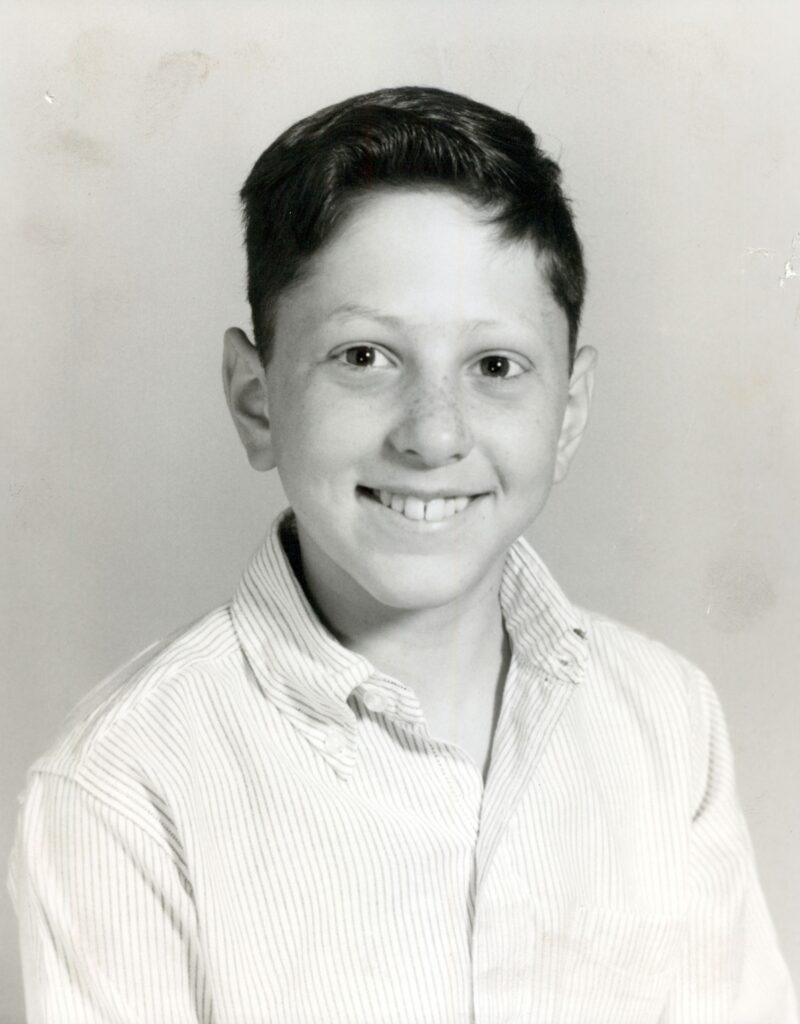
But what you wouldn’t guess is that I started going bald in kindergarten.
Over the course of my childhood, my hair came and went like a summer rainstorm. Some years, it would look halfway normal. Other years, it would fall out in huge swaths, leaving patches on my scalp I couldn’t hide. Before I graduated high school, I was wearing a hairpiece.
So, yes—you can probably imagine how that went over.
Dating. School dances. Your first kiss. Even windy days were potential disasters.
But the funny thing is, I don’t actually remember much of that awkwardness. The embarrassment, the self-consciousness, the fear of being found out—I’m sure it was there. But that’s not the story I carry with me today.
Instead, I carry this story. And it’s why I believe that going bald as a kid was the best thing that ever happened to me.
When I was in kindergarten, it wasn’t a big deal. Kids would crowd around, curious, wanting to see my bald spots. Then they’d say, “Cool!” and we’d go off and play like nothing happened.
But by the time I was in fourth grade, things had changed.
Kids had gotten meaner. Teasing had turned cruel. My hair loss was no longer a curiosity—it was a target.
One day on the playground, two sixth-grade bullies started taunting me. The teasing turned personal. I felt that tight, hot coil of shame build in my chest. I tried to ignore it. But suddenly something snapped.
I heard a roaring in my ears. My vision tunneled.
And without thinking, I charged at the biggest bully, fists windmilling, ten-year-old rage exploding out of me like a firehose. I don’t remember the next minute or two. It was just red mist and instinct.
The next thing I remember: our PE teacher, Mr. Garretson, was pulling me off the kid. Both bullies had bloody noses and black eyes. They were crying.
I didn’t have a scratch on me.
Mr. Garretson knew what had happened. He knew those kids had it coming. He didn’t punish me. Instead, he looked me right in the eyes and said:
“Rob—you don’t even like those kids.
Why do you care what they think of you?”
That sentence hit harder than anything those bullies could’ve thrown.
I stood there, breathing heavy, blinking back tears—and something in my brain rewired.
Right then, at nine years old, I learned a lesson that most adults never figure out:
My self-worth doesn’t come from other people.
It comes from inside me.
What others think of me is none of my business.
That moment changed my life. And I’ve been living by it ever since.
The Best Advice I’ve Ever Gotten
I don’t know if Mr. Garretson realized it at the time, but what he gave me wasn’t just a tough-love pep talk.
He gave me freedom.
Freedom from trying to be someone I’m not.
Freedom from contorting myself to win approval.
Freedom to stop playing small just to avoid attention.
He gave me permission to live for my own values—not someone else’s expectations.
And looking back now, I see how that single shift made everything else in my life possible.
If I’d let that fear of judgment stick, I never would’ve:
- Defied my parents’ wishes and gone to film school instead of law school
- Started a business when I had no guarantees it would work
- Survived a blizzard in the wilderness and defied experts who said I wouldn’t make it
- Sold my house at 42, bought a sailboat, and spent the next 17 years sailing around the world
Most people live life like they’re still on that 4th-grade playground—still trying to dodge bullies, still afraid someone will call them out, still trying to hide their bald spots.
But here’s the truth: everyone’s got bald spots—the visible ones, the invisible ones, the things we think make us unworthy.
And most of the time?
People are too busy worrying about their own bald spot to care about yours.
The Science Backs It Up
This isn’t just personal experience. The research lines up.
A study published in Psychological Science found that people who develop a strong internal “locus of control” early in life—believing that they control their own outcomes—are significantly more likely to succeed in careers, relationships, and health.
On the flip side, people who depend on external validation—likes, praise, approval, or reputation—report higher levels of anxiety, stress, and burnout.
Translation?
When your self-worth depends on other people’s opinions, you’re always one comment away from collapse.
But when you anchor your confidence inside yourself, you’re untouchable.
And all it takes is one moment of clarity.
One sentence.
One teacher who asks, “Why do you care what they think?”
How to Apply This in Your Life (in the Next 48 Hours)
You may not have gone bald in 4th grade.
Maybe it was acne. Or poverty. Or your weight. Or your weird name. Or the way you spoke.
Whatever it was, I’d bet good money there’s a story you’ve been carrying—something that made you feel different, or less than, or like you had to prove yourself to be accepted.
Let me challenge you to rewrite that story.
Here’s how:
Step 1: Identify the story that shaped you
Think of a time when someone made you feel “less than.” When you shrunk. When you tried to hide. When you wanted to fit in so badly it hurt.
Write it down. No filter. No edits.
Step 2: Look for the moment of power
What happened next? Did someone say something that stuck with you? Did you rise up in some way? Did that moment shape how you see yourself today?
If not—what could you say to your younger self now to shift that story?
Step 3: Rewrite the story
Don’t lie. Just change the lens.
Instead of “That was the worst day of my life,” try:
“That was the moment I learned who I didn’t want to be.”
“That was the day I stopped looking for permission.”
“That was the day I chose myself.”
This isn’t about denial. It’s about direction.
And when you start to rewrite your story that way, you give others permission to do the same.
Final Thought: We’re All Bald Somewhere
Today, I stand on stages and speak to thousands. I talk about resilience, courage, and how to lead through adversity. But here’s something most people don’t know:
All of that started on a playground.
With a kid who had no hair… and a teacher who had the guts to tell him the truth.
If I’d let those bullies define me, I wouldn’t be here today.
If I’d waited for approval, I’d still be waiting.
So if you’re hiding some part of yourself—if there’s a story that’s kept you small, or stuck, or silent—don’t bury it. Reclaim it.
Tell yourself a better version.
The real version.
The one where you realize you never needed their approval anyway.
And if you’re a parent, teacher, coach, or leader—remember this:
One sentence can change a kid’s life.
Make it count.
Want more stories like this?
Sign up for my newsletter or share this post with someone who needs to rewrite their own story.